
Agribusiness exports continue to originate foreign currency in spite of the production losses caused by the drought
FEDERICO DI YENNO – JULIO CALZADA – PATRICIA BERGERO
Argentina's crop and agribusiness, were widely affected by a drought and the rainfall that hindered the harvest. In spite of the resulting lower coarse grains production, the exports sector contributed to contribute with dollars through grains, oil and byproducts exports. According to CIARA (Argentine Republic's Oil Industry Chamber) and CEC (Cereal Exporters Center) by the month of July 2018, the sector contributed with US$ 14,253; a 5% year-on-year increase.
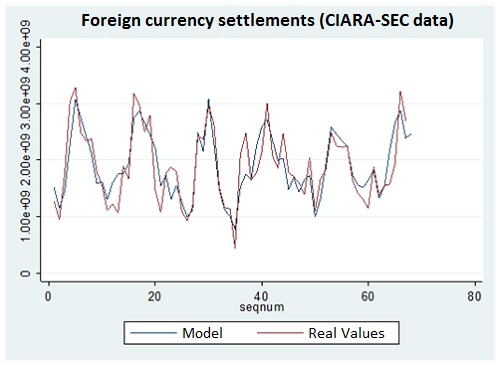
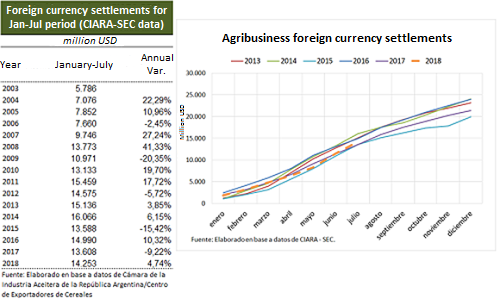 This year's contribution is the fourth-highest figure in the last 6 year, while if compared with other drought-affected years such as 2009 and 2012, current year's USD generation is superior to 2009's (US$ 10,971) and is slightly above 2012 contributions (US$ 14,575). Most of the sector's foreign currency income occurs well in advance of the export, around 30 days before in the case of grain and up to 90 days in the case of oils and meals. Running a regression, using exporter's weekly total purchases (priced contracts) according to the Ministry of Agribusiness data, they exhibit a similar behavior to the amount of foreign currency entrance.
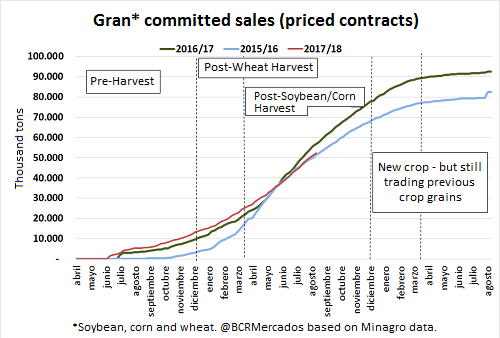
 Up to the beginning of June, both the industry and the exporters' purchases surpassed 2017's acquisitions, as the following graph shows. The pace of transactions in 2018 for corn and soybeans is not only above last year's average but it is also superior to the last 5 years average.
 It can be said, then, that the rise in the exchange rate so far in 2018 has more to do with financial market events rather than being caused by the agricultural/farming sector productive loss or the farmers/exporters retention of goods. In fact, the sector continued to originate foreign currency that soften the nation's balance of payments deficit. Nevertheless, USD entrance is expected to decrease during the August-October period because of the lower production resulting from the draught. Rosario Board of Trade anticipates an increase on USD entrance for November/December following wheat harvest.