Little supply and lack of moisture underpin wheat prices
SOFÍA CORINA – DESIRÉ SIGAUDO – EMILCE TERRÉ
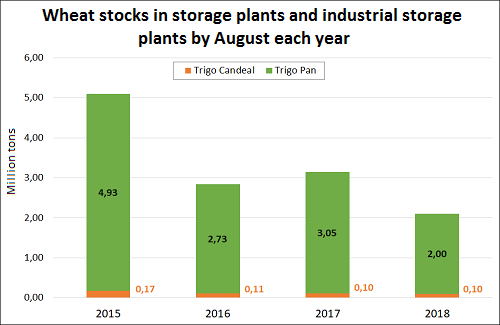
Wheat has managed to reverse part of the losses suffered on Friday, when the rumors of the implementation of additional export duties gained strength. On Thursday (09/06), Rosario's Board of Trade reference price was US$ 207.3/t, below the US$ 213.3 of the previous Thursday but above the minimum reached on Friday (08/31) of US$ 192.4/t. The new taxation scheme rises the costs of exports and has a negative effect on wheat domestic price. However, the grind wheat shortage and the fear around the lack of rain in the core productive area that could become critical in the next weeks underpin the cereal's price. Regarding wheat supply, the following graph shows the cereal's stocks in storage plants and industrial storage plants in August each year, according to the Secretary of Agribusiness. These stocks do not include grains held by farmers. The available 2.1 million tons of wheat in 2018 is the smallest volume in the past four years and they are 33% lower than the stocks from the previous year.
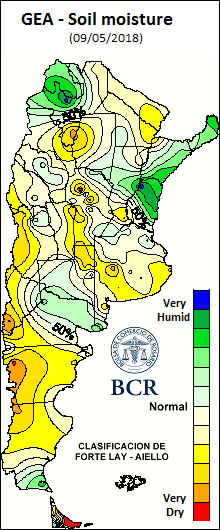
 As mentioned, the difficulties to get good quality wheat underpin wheat price. Thus, those lots that can ensure an earlier delivery get a premium on their price. As for December delivery schedule, the volume of wheat is 50% higher than last year by September 5 according to SIO Granos. In August 2017, delivery commitments for December at Rosario Norte and Sur port terminals averaged one million tons, while today they already exceed one and a half million tons. Concerning weather conditions, wheat is currently heading in Argentina's core productive region so the crops require more water. Although water reserves are good enough to maintain good crop conditions, rainfalls will be needed in the following days. A particularly dry area is Córdoba province, where yields could be affected by the lack of rain in the coming weeks as the crops begin the filling. In relation to the productive conditions, wheat cultivation in the plots of the central region begins to occur, period in which it begins to require more water. Deep soils have water reserves that maintain good crop conditions; However, there are areas where the water deficit is accentuated with the passing of days. If the water is scarce, not all the tillers that managed to develop would turn into spikes, thus resenting the final yield. Meanwhile, crops in the northern area of Argentina require water as soon as possible so that the yield does not diminish. Weather forecasts, however, are not entirely encouraging, as the expected rainfalls would remain below the normal seasonal levels.